


Britain weighs Norway-style wealth fund
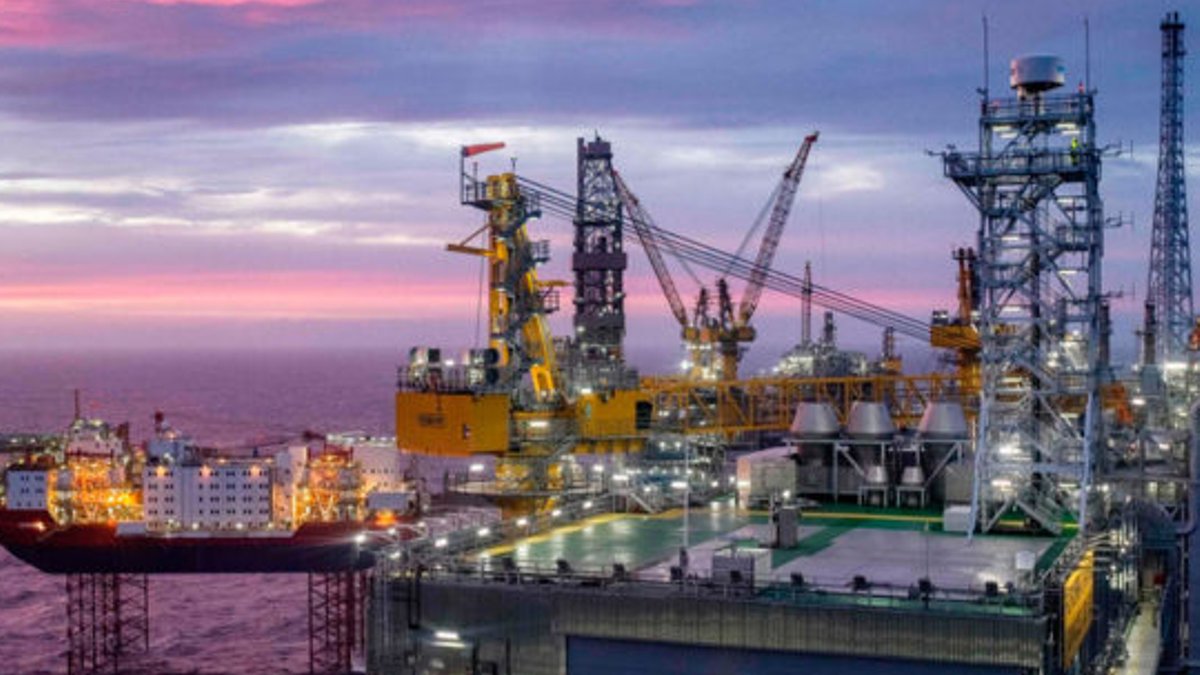
The North Sea has yielded roughly the same oil wealth for Britain and Norway since the 1970s. One country turned it into a $2 trillion financial fortress. The other spent it.
Norway’s Government Pension Fund Global, now worth over $2 trillion, owns 1.5% of every listed company in the world. The UK, by contrast, has £2.8 trillion in national debt and borrows just to cover day-to-day spending. The difference isn’t geology—it’s discipline.
The Norwegian model: save, don’t spend
Norway’s fund began with a clear principle: oil wealth is finite, but financial capital doesn’t have to be. Lawmakers established the fund in 1990, depositing its first revenues in 1996. Today, it holds stakes in Apple, Microsoft, and thousands of other companies, generating returns that fund public services without touching the principal.
Strict rules govern the system. All oil and gas revenues flow directly into the fund, not into general spending. The government only spends the expected long-term return—about 3% annually—under a fiscal rule that preserves the core wealth for future generations. Managed independently by Norges Bank Investment Management, the arrangement has avoided political interference for decades.
Each Norwegian has a theoretical per capita stake worth hundreds of thousands of dollars. The fund’s success stems from a sustained national decision to save rather than spend.
Britain’s choice: spend now, pay later
The UK extracted about £400 billion in North Sea oil revenues between 1975 and 2022. None of it was saved. Instead, the money vanished into the general budget, funding unemployment benefits, redundancy payments, and the broader costs of deindustrialization in the 1980s.
Related: Markets Evolve into Full Financial Ecosystems
The critical moment came when Norway was building its fund. Britain, under Margaret Thatcher, used oil money to manage the social fallout of closing factories and mines. Economist Wynne Godley and others had argued for a similar fund in the 1970s, but the Labour government at the time rejected the idea. The decision wasn’t ignorance—it was a deliberate choice to spend tomorrow’s money today.
Later governments followed the same pattern. As soon as revenues flowed in, they flowed out. No ring-fencing, no investment, no compounding. The outcome is a country with a shrinking tax base, rising debt, and no financial cushion for future shocks.
The UK had the resources, the expertise, and the blueprint. It simply lacked the political will to defer gratification.
A shrinking basin and a punitive tax
Now, the UK faces a harder path. North Sea production has been declining since the late 1990s, with fewer new projects and dwindling exploration. The Energy Profits Levy (EPL), introduced in 2022 to capture windfall profits, pushes the effective tax rate on oil and gas profits to 78% by 2026.
The contradiction is glaring: the UK is committed to net zero but relies on fossil fuel revenues while taxing the sector into decline. Even if Britain wanted to follow Norway’s example today, it would start with a mature basin, reduced output, and far less time to act.
The obstacles aren’t just economic. Governance poses the bigger challenge. Norway’s fund works because successive governments can’t easily access it. Britain’s political culture, with its five-year electoral cycles and chronic pressure to spend, has never successfully maintained a long-term fiscal vehicle. The Treasury would need safeguards strong enough to survive multiple governments—a cultural shift, not a technical one.
Related: Thai firm leads US dollar funds surge
The political problem may be the most difficult. Building a sovereign wealth fund would require renewed North Sea investment, which means restructuring the EPL and publicly arguing that increased fossil fuel extraction serves the national interest. In 2026, that argument is politically toxic, even where the economic logic is sound.
Could Britain still do it?
Theoretically, yes. In practice, it’s an uphill battle. The first step would be restructuring the EPL into a tiered system that rewards new drilling while still capturing revenue from mature fields. Norway’s petroleum tax model does this—high headline rates, but structured to make exploration viable rather than punitive.
But that requires reopening the North Sea to new licensing rounds and admitting that prioritizing domestic production means trading short-term net zero optics for long-term fiscal resilience. It also means acknowledging a contradiction: importing gas from oil-rich nations while shutting down domestic supply is neither economically nor environmentally coherent.
Any revenues would need to be locked away, protected by legislation and insulated from political cycles. Most long-term fiscal vehicles in Britain have collapsed under short-term pressures. A cross-party board could help design the structure, but consensus on fiscal matters is rare.
Complementary revenue streams—offshore wind leases, spectrum licenses, or future carbon credits—could supplement North Sea receipts. The final requirement is the hardest: public expectation-setting. This isn’t a quick fix. It’s a 30- to 40-year project. No sitting politician will preside over its completion.
The economics are workable. The limiting factor is whether Britain is willing to think that far ahead—and whether it can change a political culture that has spent decades choosing the present over the future.

Markets Evolve into Full Financial Ecosystems


