


Silver poised to outpace gold after steep fall
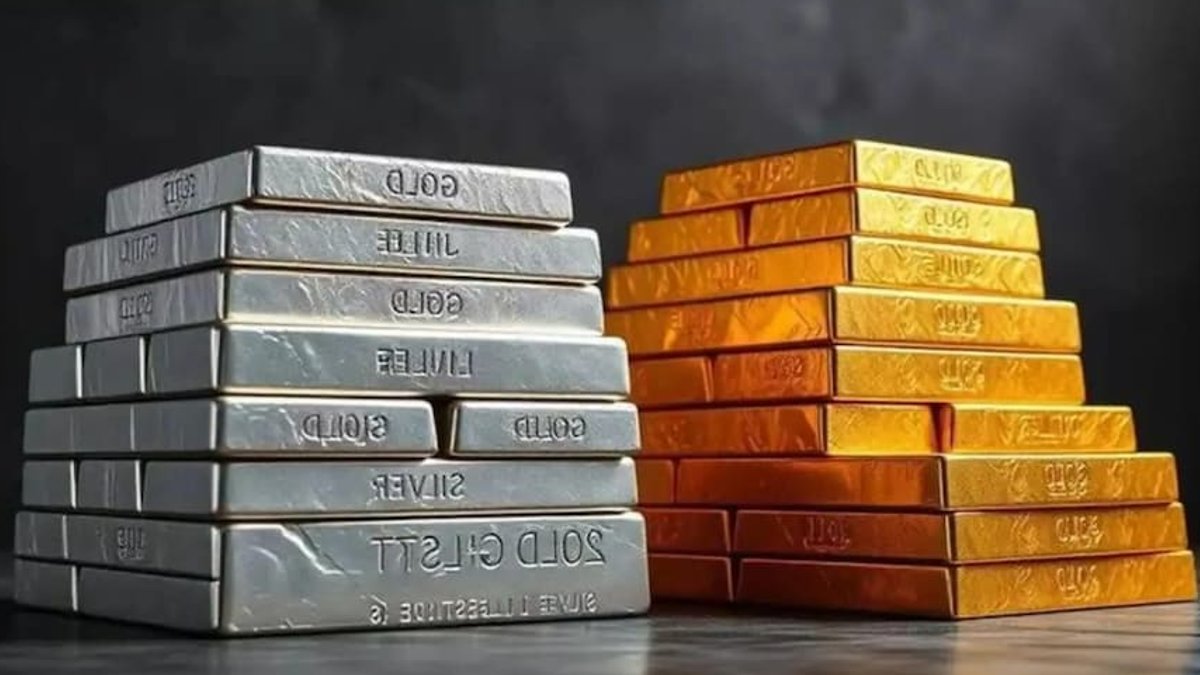
Gold and silver prices fell sharply in early trading on Wednesday, with gold dropping 0.41% to $4,420.80 an ounce and silver declining 0.21% to $66.86. Investors weighed geopolitical risks, rising crude prices, and expectations for U.S. interest rates.
Brent crude surged 1.6% to $99.49 a barrel, while WTI gained 1.72% to $94.63, marking a fourth straight session of gains. The broader precious‑metals correction has erased 30% of gold’s value and 53% of silver’s since their January peaks, but analysts say the metal may be better positioned for a rebound.
Silver’s supply deficit is deepening
Silver is now in its sixth consecutive year of a physical supply deficit, with the shortfall projected to hit 46.3 million ounces in 2026, up from 40.3 million in 2025. Since 2021, a total of 762 million ounces have been drawn from above‑ground stocks, a trend that shows no signs of slowing.
The issue isn’t just demand—it’s also a lack of new supply. Global mine production has stagnated around 830‑850 million ounces annually since 2015, and most of the metal comes as a by‑product of copper, lead, or zinc mining. New mines take nearly a decade to develop, meaning higher prices won’t quickly unlock additional output.
Gold doesn’t face the same structural bottleneck. While the metal’s production is constrained by its by‑product nature, gold mining can ramp up more quickly when prices rise. That difference could make silver more volatile—but also more prone to sharp rallies when demand returns.
Solar demand is weakening, but the deficit persists
One of the biggest demand drivers, solar panels, is showing signs of strain. Photovoltaic silver consumption is expected to drop 19% in 2026 to around 151 million ounces, following a 6% decline in 2025. The drop isn’t due to outright substitution; it’s more about efficiency.
Manufacturers are using less of the metal per solar cell, but there’s a practical limit to how much they can reduce it without hurting performance. Copper substitution in the dominant TOPCon technology won’t become widespread until 2028‑30, meaning the metal’s role in solar won’t disappear anytime soon.
Related Post: Housing Market Sees Slight Price Increase
Even with weaker solar demand, the physical shortfall has continued to widen. That suggests the market is still tight, and any rebound in investment demand could push prices higher.
Silver’s paper market is highly leveraged, and that cuts both ways
The market structure amplifies moves in either direction. COMEX inventories currently stand at just 96 million ounces, covering only 17.8% of outstanding paper claims. That means the market is running on roughly 5.6x leverage, so small shifts in sentiment can trigger outsized price swings.
The same leverage that contributed to the earlier 53% drop from the January peak could now work in its favor when physical demand returns.
Investment demand is expected to rise 20% in 2026 to 227 million ounces, while U.S. retail demand could rebound 57%. If those trends materialize, the tight supply backdrop could force prices up faster than gold’s.
Monarch PMS, a precious‑metals firm, puts the metal’s fair‑value range at $54‑$77 an ounce, with a midpoint of $65. At $61.7 on August 6, it was trading 6% below that midpoint, cheaper than gold, which was 8% above its own $3,922 midpoint.
Analysts note the trade‑off is volatility: the metal can drop faster than gold, but the correction may have reset the market for a stronger upside move.
For now, the metals remain in a holding pattern, but the underlying fundamentals, tight supply, weak solar demand offset by physical shortfalls, and leverage, suggest silver could outperform gold in the near term.

Demat accounts outpace investors, challenge brokerages


