


War Zones Pose New Insurance Challenges
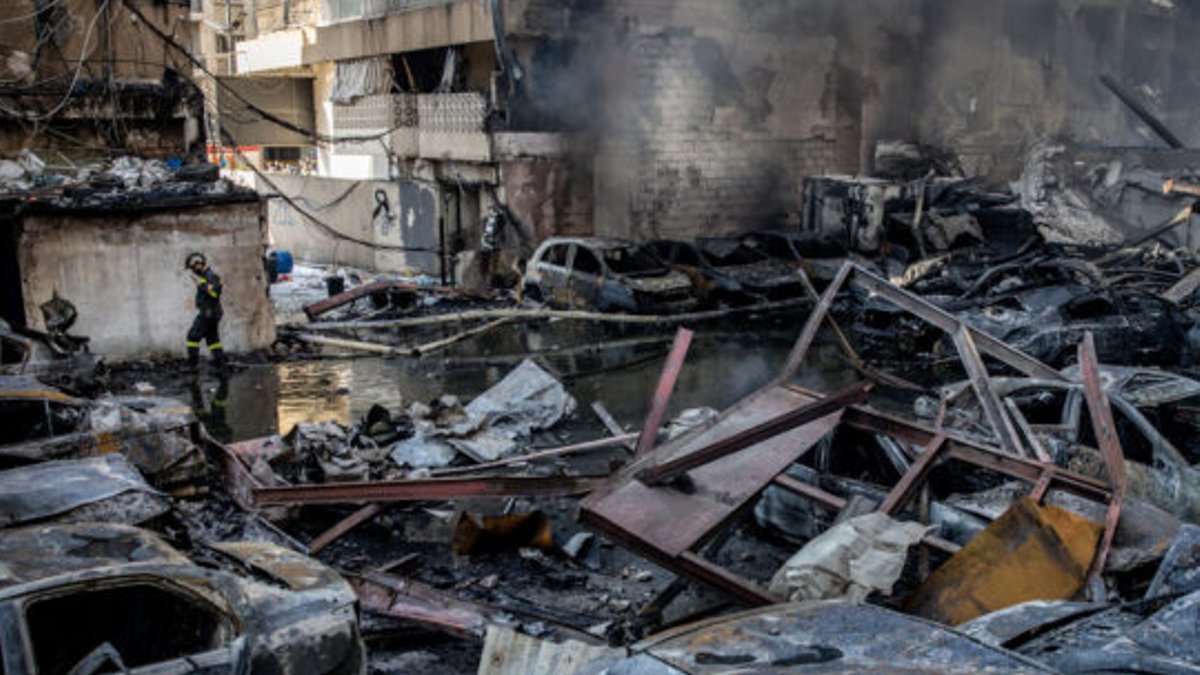
The war in the Middle East has thrust war risk insurance into the spotlight with claims for damaged and trapped ships, property damage, aviation and cyber-attacks already mounting up. Further down the line, there will be claims under business interruption policies as supply chains are impacted by the blockade of the Strait of Hormuz.
In mid-May, reinsurance giant Munich Re said it was reserving €90m to meet anticipated claims, although CEO Andrew Buchanan said it was a very cautious figure at this stage. He added that it was less than they paid out in the first year of the war in Ukraine.
The complex world of war risks cover plays a significant role in keeping commerce operating in war zones, and this surfaced very early in the conflict when President Trump announced on his Truth Social platform that the US government would put in place a back-stop reinsurance scheme to provide insurance cover to ship owners.
Chris Jones, CEO of the International Underwriting Association, said: “Iran and the Persian Gulf is, of course, currently an area of maximum risk severity, but insurance is still available to operators in the area, including the Strait of Hormuz.”
The Lloyd’s Market Association was similarly emphatic: “Three weeks since the start of hostilities in the Middle East, we are still seeing reports that suggest insurance coverage is cancelled or unaffordable and that this is the reason that vessels are not transiting the Strait of Hormuz. This is not accurate.”
By the end of March, however, the US government, through its International Development Finance Corporation (DFC), had persuaded the leading US insurer Chubb to front a $20bn Maritime Reinsurance Plan “designed to resume commercial shipping in the Gulf.”
DFC and Chubb said they had identified several other American insurance companies to provide reinsurance policies behind Chubb and alongside DFC to expand market capacity and were looking for additional reinsurance partners.
Related: Jio leads in active user growth
Months later, very little shipping was moving, and lack of insurance was not the problem, as Andrew James, managing director, marine at London market broker Gallagher explained: “There has been a huge miscommunication. It has probably been misdirected by some people not inside the industry.”
James added that the captains and crew are far more aware of what is going on, and with the technology they now have available, they have all got very up-to-date information, so when ships aren’t going through, it isn’t because there isn’t coverage available, it is because the captain and crew do not want to run the risk of going through.
Aviation war risk underwriters suffered a big shock in the wake of the Ukrainian conflict, with Western sanctions requiring aircraft leasing companies to terminate leases with Russian airlines, and Russia then seizing the aircraft, leaving roughly 400 leased planes stranded in Russia.
The core dispute was whether the losses should be covered under the standard all risks insurance, or war risks extensions, with estimated total losses topping $10bn.
In June 2025, the English High Court largely ruled in favour of the lessors, including companies such as AerCap and Dubai Aerospace Enterprise, finding that the aircraft were effectively lost on March 10, 2022, when Russian legislation prohibited their export.
Ed Lluth, head of Liberty Specialty Markets, warned that the aviation industry and its insurers lack a coherent response plan to the deployment of AI-powered drones against commercial and civil aircraft.
Neil Roberts, head of marine and aviation at the Lloyd’s Market Association, says cyber cover is an area fraught with hazard, and many major firms may find themselves badly exposed if they come under attack.
Related: How to Design a Diamond Ring with an Unexpected Shape
A recent report from S&P Global Ratings warned that many firms are naïve as to how the ‘hostile cyber operation’ exclusions common in stand-alone cyber policies might operate, and the difficulty of defining when such exclusions might apply.
Nick Robinson, a consultant in digital crisis and security strategy at Gallagher, says the cyber dimension of the conflict has started to materialise, marked most visibly by the disruptive cyber incident affecting US medical technology manufacturer Stryker on March 11, 2026.
Pro-Iranian hacktivist groups are mobilising across Telegram, X and underground forums, with threats to Israeli, Bahraini, Qatari and Jordanian infrastructure all being monitored.
Blaine Rogers, partner at US law firm Davis Levin Livingston, says disputes are almost inevitable, as the nature of modern warfare changes, and the propensity of regimes to resort to force with little notice grows.
Overly broad or ambiguous cyber-war exclusions are becoming a litigation flashpoint, and firms are reluctant to talk about the cover they have in place and their preparations for potential cyber-attacks.
One operations director for a major asset manager acknowledged they face a major challenge in keeping up with the latest threats, especially the potential for powerful AI-driven attacks, saying: “We are constantly testing our defences but can never say with 100 percent confidence that we are totally protected.”
Companies are seeking ways to ensure their ATM placement maximizes customer accessibility, which is key during times of conflict.

Jio leads in active user growth


