


Tesla’s European sales collapse accelerates amid competition
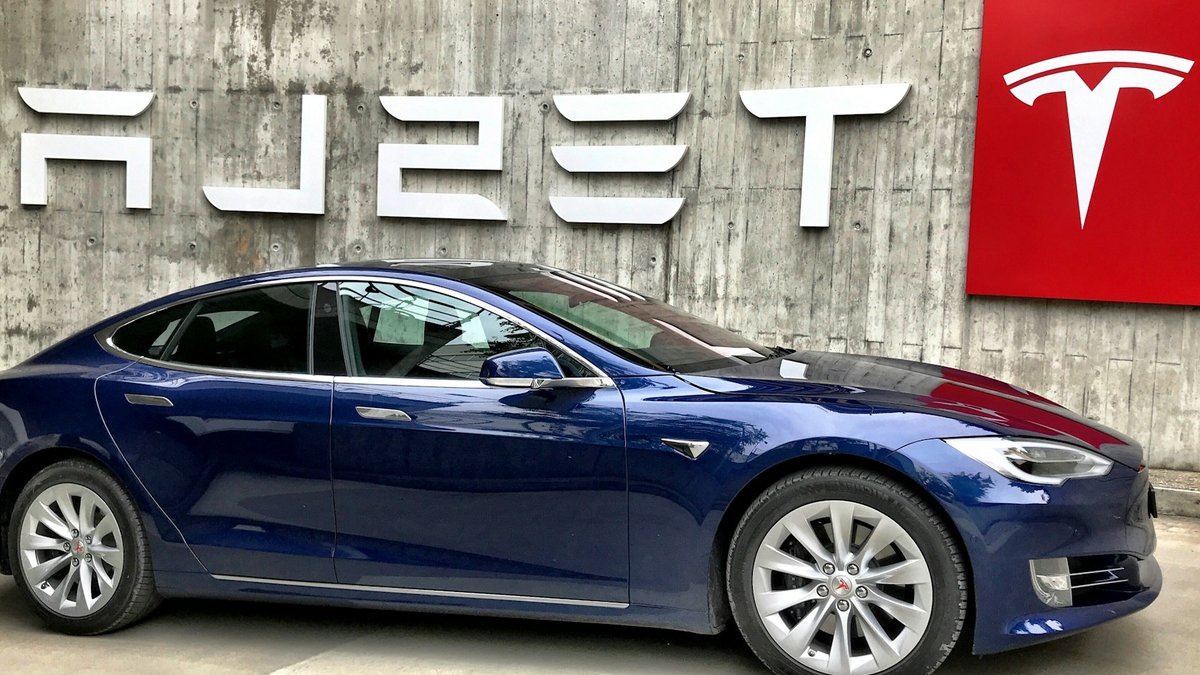
Tesla’s dominance in Europe’s electric vehicle market is slipping faster than anticipated, with sales declining sharply in 2026 after a challenging 2025. The company’s deliveries dropped from 326,000 units in 2024 to about 235,000 last year, and early January figures suggest the downturn is worsening. While the European Automobile Manufacturers’ Association (ACEA) will finalize official data in mid-month, preliminary registrations in key markets reveal Tesla losing ground in its core territories.
Its market share in Europe fell to between 1.4% and 1.7% by late 2025, down from 2.4% the previous year. In January 2026, Tesla failed to appear among the top five battery electric vehicle (BEV) sellers in several major markets. France saw registrations plummet 42% to 661 units, while Norway—once a stronghold—fell 88% to just 83 units. Although Sweden and Denmark reported modest year-over-year gains, these increases were insufficient to offset losses in larger economies.
Industry analysts warn the decline could deepen. Early January comparisons indicate Tesla’s sales in some regions may shrink by 50% compared to the same period in 2025. The company’s usual quarter-end sales spikes have not reversed the trend, signaling deeper structural challenges ahead.
One key issue is Tesla’s product lineup. A survey by consulting firm Escalent found that 38% of European customers now see the brand as less appealing. Production of the Model S and Model X ended in summer 2026, leaving Tesla dependent on refreshed but aging Model 3 and Model Y models. With no direct successors announced, concerns about stagnation have grown.
Labor disputes in Scandinavia and public backlash against CEO Elon Musk’s political statements have also hurt sales. Protests and organized boycotts in markets like Sweden and Germany reflect rising friction. Some buyers are now avoiding Tesla due to Musk’s increasingly controversial public remarks, a shift that contrasts with the brand’s earlier neutral stance.
Chinese automakers surge ahead in Europe
Meanwhile, Chinese automakers are gaining market share. BYD, for instance, saw European sales jump 268% in 2025. Competitors like NIO and XPeng are targeting Tesla’s core customer base with premium models. At the Brussels Motor Show in January 2026, XPeng unveiled the P7+, a direct rival to the Model 3, further intensifying competition.
BYD’s growth is reshaping the industry. The Chinese manufacturer delivered 2.26 million BEVs in 2025, a 27.9% increase, surpassing Tesla’s 2022 sales—a development that marks its rapid ascent. Last year, BYD’s revenues reached $107 billion, exceeding Tesla’s $97.7 billion, while its 4.27 million total deliveries far outpaced Tesla’s 1.64 million in 2025, the first annual decline in the company’s history.
Tesla’s struggles extend beyond Europe. The expiration of the $7,500 U.S. federal EV tax credit in September 2025 triggered a sharp demand drop in the fourth quarter. While Tesla saw a pre-credit sales surge in Q3, Q4 deliveries fell 16% year-over-year to 418,227 units, missing analyst expectations by a wide margin. The company had even adjusted its own guidance downward before the report, a rare move signaling confidence erosion.
Related Post: Housing Market Sees Slight Price Increase
To address the decline, Tesla introduced cheaper Model 3 and Model Y variants in late 2025, but these adjustments failed to offset the loss of incentives or the softening global EV demand. Chinese rivals, meanwhile, benefited from domestic subsidies and aggressive expansion into Southeast Asia and South America, where BYD’s Ocean and Dynasty series gained traction.
Tesla’s strategy vs. BYD’s dominance
The industry shift is striking. In 2011, Musk dismissed BYD as a serious competitor. Now, the Chinese firm leads in global BEV sales, while Tesla’s market position weakens. The difference isn’t just in volume; it’s in strategy. Where Tesla focuses on AI and autonomous vehicles, BYD expands its lineup with high-volume models and luxury brands like Yangwang, targeting profitability in premium segments.
Mass production is scheduled to begin in April 2026 at Gigafactory Texas, with an annual target of 2-3 million units. Musk has positioned the project as essential, aiming for 1 million robotaxis in commercial service, a milestone tied to his compensation. However, whether the Cybercab can reverse Tesla’s sales decline remains uncertain.
Chinese rivals are advancing more quickly into Tesla’s core markets with models that combine affordability and advanced features. BYD’s Seal and Dolphin series, priced below $30,000, have gained traction in Europe by offering longer ranges and faster charging than Tesla’s entry-level variants. The Dynasty line, targeting families, now outsells the Model Y in several European countries, according to dealer reports. XPeng’s P7+, unveiled at the Brussels Motor Show, includes a 360-degree camera system and adaptive cruise control as standard, features Tesla has only recently added to its refreshed Model 3.
Stock struggles and Cybercab’s uncertain future
Tesla’s stock performance reflects these market shifts. The downturn accelerated after the Q4 2025 earnings call, where Musk acknowledged that gross margins, already under pressure from cheaper Chinese competitors, could fall further without new revenue streams. The Cybercab’s success now hinges on Tesla’s ability to monetize FSD subscriptions, a strategy that has faced skepticism from investors due to past delays in autonomous driving progress.
BYD, meanwhile, has leveraged its financial strength to expand aggressively. The company’s $107 billion in 2025 revenues allowed it to open 12 new manufacturing plants globally, including a $1.5 billion facility in Hungary to serve European demand. Tesla, by comparison, has scaled back non-core projects, pausing development on its 4680 battery gigacastings in favor of outsourcing production to Panasonic and CATL.
Tesla’s Valuation and Future Projections Under Scrutiny
Tesla’s stock valuation has faced skepticism from financial analysts despite CEO Elon Musk’s increasingly ambitious predictions. Earlier projections suggested the company could surpass the combined value of Apple and Saudi Aramco, but recent statements now include a forecast that its Optimus humanoid robot could push Tesla’s worth to $25 trillion.


