


Nvidia Shifts Focus to Physical AI Systems
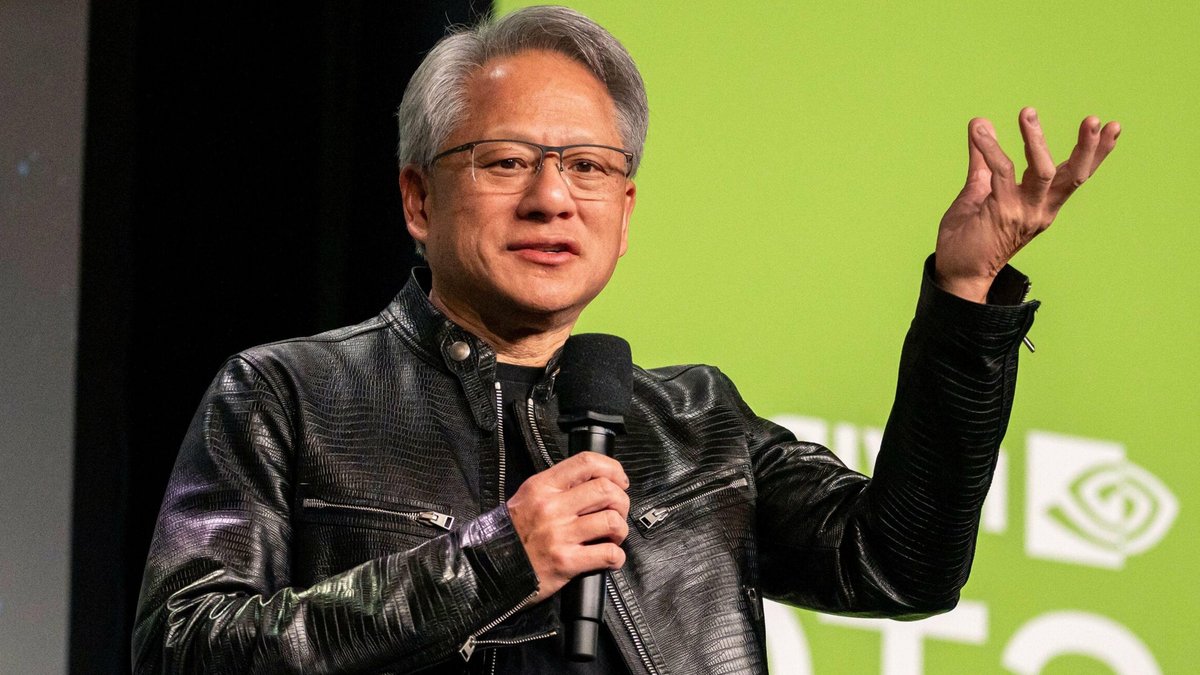
At CES 2026, Nvidia CEO Jensen Huang unveiled a strategic pivot toward “Physical AI,” signaling a new direction for the company. This initiative focuses on advancing AI beyond digital assistants to enable machines to reason and interact with the physical world.
The company provided more details about Vera Rubin, a platform named after the pioneering astronomer. Rubin is Nvidia’s first “extreme-codesigned” system, where GPUs, CPUs, networking, and storage are engineered as a single fabric.
Rubin is designed to reduce the cost of AI tokens to a tenth of current costs while providing significantly higher throughput per megawatt. Jensen Huang stated, “Rubin arrives at exactly the right moment, as AI computing demand for both training and inference is going through the roof.”
Jensen Huang added, “With our annual cadence of delivering a new generation of AI supercomputers — and extreme codesign across six new chips — Rubin takes a giant leap toward the next frontier of AI.” William Blair analyst Sebastien Naji noted that the significant increase in performance in Vera Rubin would require roughly one-fourth the number of GPUs to train a model versus Blackwell.
Autonomous Driving Future
Nvidia sees autonomous driving as the next growth driver, with Jensen Huang imagining a future where “a billion cars on the road will all be autonomous”. The company reaffirmed its goal for Level 4 Robotaxi deployments by 2027 and is positioning its software stack as a “robotaxi-ready” reference architecture.
Nvidia unveiled Alpamayo, a new family of open-source AI models and tools designed to solve the “long-tail” of autonomous driving. Alpamayo 1 is a 10-billion-parameter Vision-Language-Action model that processes video input and generates driving trajectories, explaining why it chose a specific action.
For example, if a car encounters a broken traffic light, the model can reason that it should follow a traffic officer’s hand signals or standard yielding rules rather than just stopping indefinitely. Jensen Huang believes that physical AI is the next big opportunity, stating, “The ChatGPT moment for robotics is here.”
Wedbush analyst Dan Ives shared this view, writing, “We believe the robotics and autonomous technology market represents an incremental market opportunity that Nvidia can tap into, which speaks to our view that this company will exceed $5 trillion market cap in the near-term and ultimately could be a $6 trillion market cap.”
Robotics and AI Models
Nvidia introduced the Cosmos family of foundation models, designed to give robots physical intuition. Cosmos can generate realistic videos from single images and predict the physical trajectories of objects to help robots “understand” their environment. The company also unveiled the Isaac GR00T N1.6 model, which offers improved whole-body control for humanoid robots.
As Nvidia pushes the boundaries of AI-driven gaming performance, the company announced DLSS 4.5 features, including a “2nd Gen Super Resolution Transformer” for better image stability. A new 6x Dynamic Multi-Frame Generation was announced for the RTX 50 series, targeting 4K 240Hz performance.
Nvidia Ecosystem Expansion
Nvidia’s transition from a chip manufacturer to an “Intelligence Backbone” is evident in its efforts to open-source massive models like Alpamayo and Cosmos. By doing so, the company aims to create an ecosystem where everyone builds on Nvidia software, much like it did for AI research with CUDA.
Nvidia’s efforts to expand its reach in the gaming market continue with the announcement of native apps for Linux and Amazon Fire TV, allowing more users to access GeForce NOW. The company also introduced RTX Remix Logic, a tool for modders that enables classic games to react to in-game events in real-time.
Additionally, the DLSS 4.5 features a “2nd Gen Super Resolution Transformer” for better image stability, providing a more immersive experience for gamers.


